How to Get Dog Hair Out of Your Car (and Why Vacuuming Never Works)


You vacuum the car. It looks great. A week later there is dog hair on the seats again and you did not even take the dog anywhere.
That is not you missing spots. Pet hair behaves differently than dirt, and the standard approach genuinely does not work on it. Here is why, and what does.
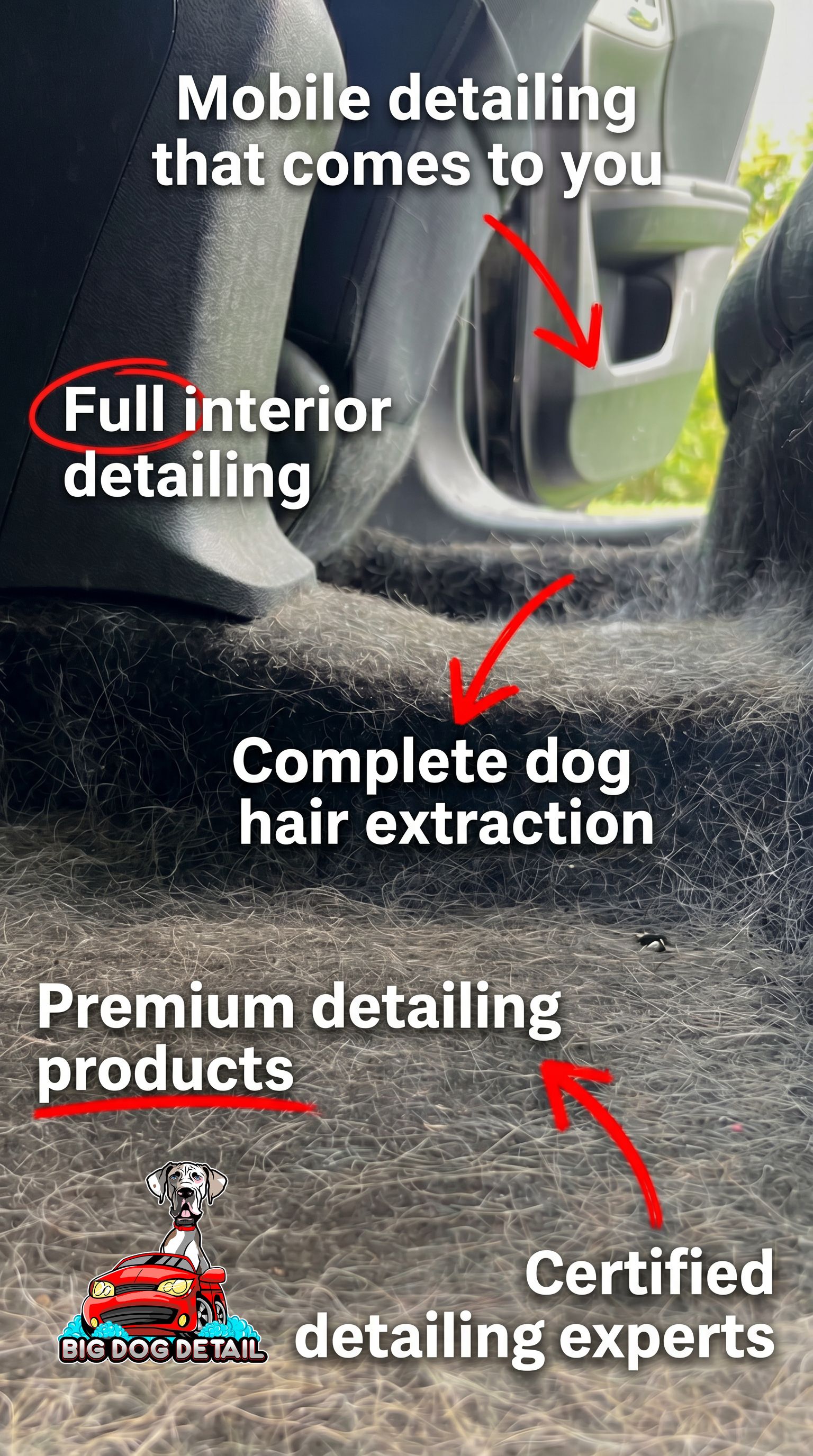
Why vacuuming does not work
Pet hair does not rest on top of fabric the way dust does. Static electricity pulls it down into the weave, where the individual hairs wedge between fibers and anchor themselves. Dog hair in particular has a barbed structure that grips fabric mechanically once it works its way in.
A vacuum applies suction perpendicular to the surface. It lifts what is loose. It does not have the mechanical action needed to break hair free of the fibers holding it, so it removes the top layer and leaves the anchored hair exactly where it was.
That is why the car looks clean and then does not. The hair you are seeing a week later was there the whole time — it just worked its way back up.
The order matters more than the tools
This is the single most important thing to understand, and it is where most DIY attempts go wrong.
Correct order: loosen dry, then vacuum, then extract.
Hair has to be mechanically freed from the fibers before suction can do anything. That means working the fabric dry first, with something that creates friction and static disruption. Rubber-bristle brushes work by dragging hair up out of the weave. Compressed air blows it free from seams and tight areas that no brush reaches.
Only after the hair is loose does vacuuming accomplish much. Then extraction handles the dander and residue left behind.
What goes wrong: people start with water or cleaning solution. Wet fibers swell and grip tighter, and wet hair mats together and bonds to the fabric. Introducing moisture first turns a difficult job into a much harder one, and it is the most common mistake we see.
What works at home
If you want to tackle it yourself, some of this genuinely helps.
Rubber gloves. Put on a dish glove, dampen it very slightly, and drag your hand across the seat in one direction. Hair balls up and lifts. This works surprisingly well and costs nothing.
Pumice stone or rubber pet brush. Same principle with more aggression. Test on an inconspicuous area first, because on delicate fabric it can be too much.
Squeegee. A rubber squeegee dragged across carpet pulls embedded hair up out of the pile.
Balloon or inflated glove. Static attracts loose hair. Genuinely works on light accumulation.
Work one direction. Back and forth just moves hair around. Consistent single-direction strokes carry it toward one area where you can collect it.
What does not work: lint rollers and tape lift surface hair only, and on a car interior you will exhaust a roll before finishing one seat. Fabric softener sprays leave residue that attracts more dirt.
The part nobody thinks about: dander
Hair is what you see. Dander is the actual allergen.
Dander is microscopic skin flakes, and it settles into fabric, works into carpet backing, and collects in your vents. It remains after every visible hair is gone, and it recirculates through the cabin every time the climate system runs.
For anyone in the household with allergies or asthma, that recirculating dander matters more than the hair does. It is also the reason a car can smell like dog after the dog has not been in it for weeks.
Removing dander requires extraction — hot water and immediate vacuum recovery that pulls it out of the material — plus attention to the vents and cabin air filter. Brushing and vacuuming alone will not do it.
Areas that get missed
Seat seams and stitching, where hair packs in tight. Under and between the seats, especially around the rail mechanisms. Seat belt webbing and the retractor slot. The trunk and cargo area, which most dog owners neglect entirely. Vents, where circulating dander accumulates. The headliner, if you have a dog that likes to stand up.
How often, in this climate
For a vehicle that regularly carries a dog in the Chattanooga area, monthly professional interior work is realistic. Humidity here means dander and organic residue do not dry out and stay put — they hold moisture, which is how you get odor on top of the allergen problem.
Between professional visits, a rubber glove pass every couple of weeks keeps accumulation manageable.
Why it matters beyond comfort
If you lease, pet hair and dander are a documented source of end-of-lease charges. If you are selling, a visibly hair-covered interior gives a buyer an immediate reason to negotiate down, and it is one of the first things anyone notices when they open the door.
Adding moisture first is the most common mistake. Wet fibers swell and grip tighter — it turns a difficult job into a much harder one.
Dog hair is one of the few interior problems where doing it wrong actively makes it harder. If you have been fighting it with a vacuum and getting nowhere, the vacuum was never going to win that fight.
Big Dog Detail provides mobile pet hair removal and interior detailing throughout Greater Chattanooga. We come to your driveway, which is convenient when the dog is the reason the car needs attention in the first place.