Is Ceramic Coating Worth It? An Honest Answer for Chattanooga Drivers


.png)
Ceramic coating is the most oversold product in the detailing industry and also one of the most genuinely useful, which makes it difficult to get a straight answer about.
This is what ceramic coating actually does, what it does not do regardless of what you have been told, what it costs, and how to decide whether it makes sense for your vehicle in the Chattanooga climate.
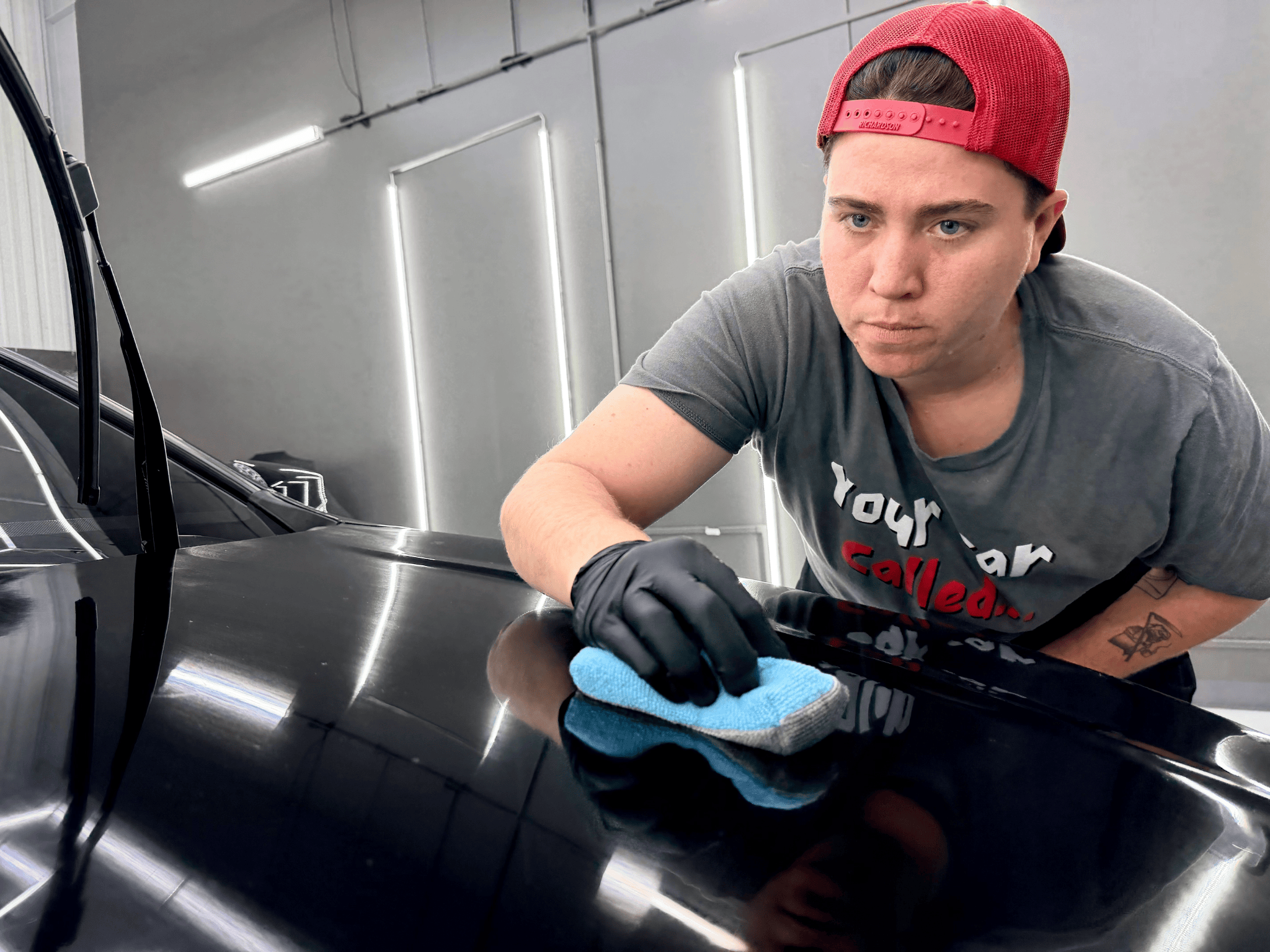
Ceramic coating on a properly corrected finish
What ceramic coating actually is
Ceramic coating is a liquid polymer that bonds chemically to your clear coat and cures into a hard, transparent layer. That chemical bond is the difference between coating and wax. Wax sits on top of your paint and washes away over months. Coating becomes part of the surface, which is why durability is measured in years.
What that layer gives you is threefold. It resists UV oxidation, the process that fades paint and turns dark colors chalky. It resists chemical etching from bird droppings, tree sap, and acidic rain. And it is hydrophobic, meaning water beads tightly and rolls off instead of sheeting, carrying loose contamination with it as it goes.
The practical result is a car that stays cleaner longer, washes more easily, and holds its gloss instead of gradually dulling.
What it does not do
This is where most of the disappointment comes from, so it is worth being direct.
It does not stop rock chips. A coating is measured in microns. A rock traveling at highway speed carries enough energy to go through clear coat regardless of what is on top of it. If chip protection is what you are after, that is paint protection film, which is a different product entirely.
It does not prevent water spots. This surprises people, and it is worth understanding why. Water spots are mineral deposits left behind when water evaporates. Your water contains calcium and magnesium whether or not your paint is coated. In fact, a hydrophobic surface can make spots more visible, because water beads into concentrated droplets rather than sheeting off, and each bead leaves its minerals in one tight spot. The fix is simple: dry the car rather than letting it air dry.
It does not hide swirl marks. A coating is transparent and it amplifies whatever is underneath. Applying it to swirled paint locks those defects in for the life of the coating.
It does not mean you stop washing. It means washing gets easier. A coated car still needs regular maintenance with pH-neutral soap.
Paint correction has to come first
This is the step that separates a coating that looks incredible from one that looks like an expensive mistake.
Most swirl marks in a clear coat come from how a car has been washed, not from driving it. Grit dragged across paint by a wash mitt, single-bucket washing that recycles dirt back onto the panel, and automatic car wash brushes all leave fine scratches that scatter light and make paint look flat.
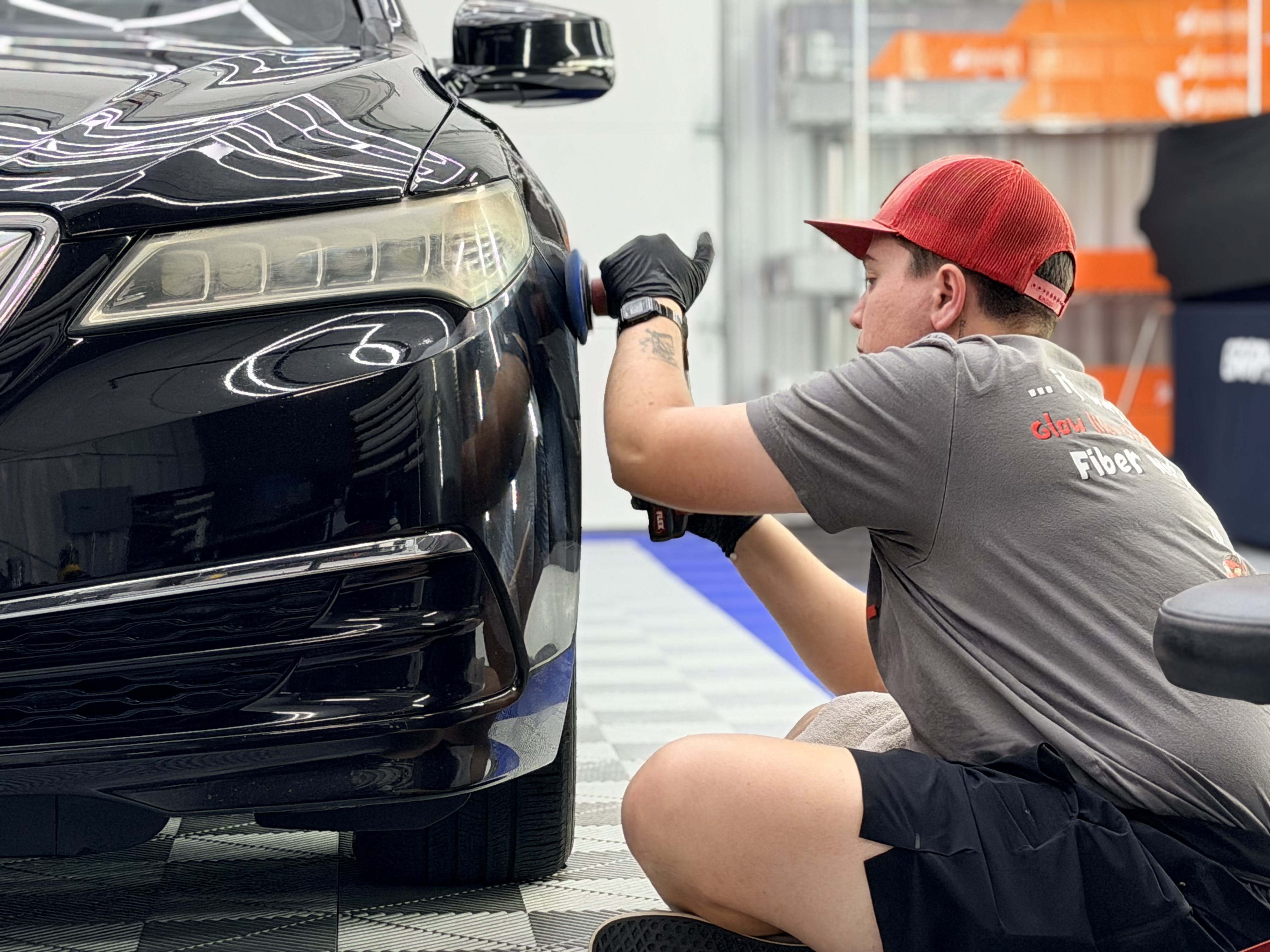
Paint correction removes those defects by leveling a microscopic amount of clear coat until the surface is uniform again. It is done with a machine polisher, appropriate pads, and controlled technique, and it requires real skill — clear coat is thinner than a sheet of paper, and too much pressure or the wrong pad causes damage that only refinishing will fix.
Once corrected, the coating goes on a clean, defect-free surface and stays that way for years. Skip correction and you are sealing in every swirl at considerable expense.
What it costs, and what drives the price
Ceramic coating pricing varies widely, and most of the variation is not the coating itself. It is the preparation.
A quote reflects vehicle size, the condition of the paint, how many correction stages are needed, and the grade of coating being applied. A neglected daily driver needing multi-stage correction takes far more labor than a nearly new car that needs a single finishing pass. Two vehicles can get the same coating and differ substantially in price for that reason alone.
Be skeptical of very cheap ceramic coating offers. The material cost is a small fraction of the job. When a price is dramatically lower than everyone else, the savings are almost always coming out of the preparation — which is the part that determines how the result looks in year three.
Why Chattanooga makes the case stronger
Two features of this climate work in favor of coating.
The first is humidity. At 75 to 80 percent year round, moisture is constantly present, and moisture combined with UV is what drives oxidation. Coating puts a barrier between your clear coat and that process.
The second is our tree cover. Sap and bird droppings are acidic, and on unprotected paint they begin etching within hours in summer heat. On a coated surface, contamination sits on the coating rather than the clear coat, which buys you time to remove it before damage occurs.
Spring pollen deserves a mention too. Pollen is not inert — it can etch clear coat if it sits through a rain cycle and then bakes. Coated paint releases it far more easily during a wash.
How long it lasts
Durability depends on the coating grade and on maintenance. Professional-grade coatings are rated for multiple years, and silicon carbide formulations at the top of the market are rated well beyond that.
What actually determines whether you get the rated life is how the car is washed afterward. Automatic car washes with brushes will degrade a coating quickly. Hand washing with pH-neutral soap and the two-bucket method preserves it. Drying rather than air drying prevents mineral buildup on the surface.
So is it worth it?
It is worth it if you are keeping the vehicle several years, it spends time outdoors, and you would rather protect the finish than restore it later. It is worth it if you are tired of how much effort washing takes.
It is probably not worth it if you are selling the car within a year, if it lives in a garage and rarely goes out, or if the paint is in poor enough condition that the correction cost outweighs what the vehicle is worth to you.
The honest version is that ceramic coating is protection and convenience, not magic. Understood that way, most people who get one are glad they did.
A ceramic coating is transparent — it amplifies whatever is underneath it. Applied over swirl marks, it locks those defects in for the life of the coating.
Ceramic coating is worth it for a lot of vehicles in this area, and it is not worth it for some. The variables that matter are how long you are keeping the car, whether it sits outside, and whether the paint is in good enough condition to justify locking it in.
Big Dog Detail provides ceramic coating and paint correction throughout Greater Chattanooga, and we will tell you honestly if your vehicle is not a good candidate. We are also matte paint certified, which matters if you are driving a matte or satin finish.