What Is Actually Living in Your Car Interior?


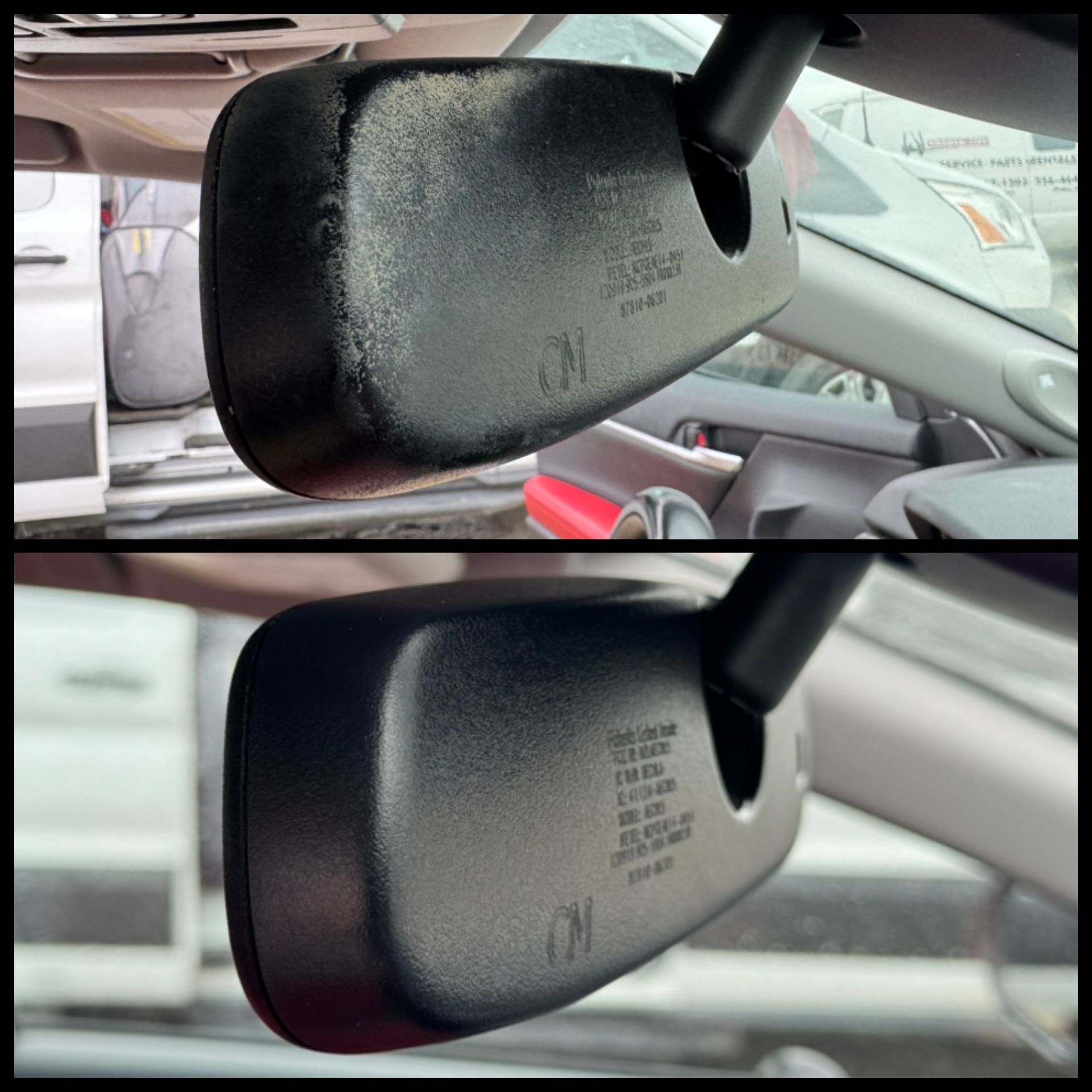
You spend hours a week inside a small sealed box, breathing air that recirculates through fabric, vents, and a filter most people have never replaced.
This is not meant to alarm anyone. But interior detailing is usually framed as cosmetic, and there is a practical case for it that has nothing to do with how the car looks.

The high-touch surfaces
Think about where your hands go in a car. Steering wheel, shifter, door handles, cup holders, climate controls, touchscreen. Now think about what your hands touched immediately before: a fuel pump handle, a shopping cart, a door at a restaurant, your phone.
Every one of those surfaces goes directly into your car, and unlike your kitchen counter, almost nobody wipes them down.
You will see a lot of statistics online comparing steering wheels to toilet seats. Most trace back to small marketing studies rather than peer-reviewed research, so treat the specific multipliers with skepticism. The underlying point holds without them: high-touch surfaces in a car accumulate bacteria and essentially never get disinfected.
Cup holders are their own category
Cup holders combine everything that supports microbial growth. Sugar and organic residue from spilled drinks. Moisture that does not evaporate in a deep, narrow well. Warmth from a car sitting in the sun. Darkness. And a shape that no cloth actually reaches.
That is a fair description of ideal growing conditions, sitting in your center console.
What accumulates in fabric
Carpet and upholstery act as filters. They catch and hold whatever enters the vehicle, and unlike an actual filter, they never get changed.
Dust and dead skin. Pollen tracked in on clothing, which in Chattanooga is significant for months of the year. Pet dander, which persists long after visible hair is gone. Food particles from years of eating in the car. Moisture from wet shoes, umbrellas, and gym bags.
A vacuum removes the top layer of that. It does not reach what has worked down into carpet backing and seat foam.
The vents
This is the part people never think about, and it matters most for air quality.
Your climate system pulls air across an evaporator core that is cold and damp by design, then pushes it through ducts and out the vents. Anything growing in that pathway gets aerosolized into the cabin every time the fan runs.
If your car smells briefly musty when you first turn on the air conditioning and then fades, that is the system pushing accumulated growth out of the ducts.
The cabin air filter sits in that pathway. When it loads up with pollen and organic debris, and it stays damp in this humidity, it stops being a filter and starts being a source. Most manufacturers specify replacement every 15,000 to 25,000 miles. Most people have never replaced one.
Why Chattanooga makes it worse
Everything above depends on moisture, and moisture is the one thing this region has in abundance. At 75 to 80 percent humidity year round, organic material in your carpet does not dry out. Spills stay damp in the padding. Condensation on the evaporator does not fully evaporate.
In Phoenix, a spilled drink dries and becomes a stain. Here it stays wet long enough to become something else.
Who this actually matters for
For most healthy adults, a somewhat dirty car interior is unpleasant rather than harmful. The people it genuinely matters for are more specific.
Anyone with asthma or respiratory sensitivity, where recirculating dander and mold spores can trigger symptoms. Allergy sufferers during pollen season, when the car can be worse than being outdoors if the filter is saturated. Children, who spend time in car seats where food and drink accumulate. Anyone with a long commute, simply because exposure time adds up.
The CDC associates mold exposure with respiratory symptoms and allergic reactions in sensitive individuals, and a car is a small enclosed space with recirculating air.
What professional interior work actually does
Extraction, not shampooing. Hot water and cleaning solution injected into the material and immediately vacuumed back out, pulling contamination with it. This is the step that distinguishes real interior work.
Detail brushes and compressed air for seams, vents, and crevices that no cloth reaches.
Surface-appropriate cleaners. What is safe on textured plastic will haze piano-black trim, and what works on fabric will damage leather.
Antimicrobial treatment on surfaces after cleaning rather than fragrance on top of them.
Complete drying, which in this humidity means air movers rather than open windows.
A realistic interval
Every three to four months for a normally used vehicle in this climate. Monthly if pets ride regularly. Cabin air filter annually at minimum, sooner if you have not checked it.
Between professional visits, wiping high-touch surfaces occasionally does more for the actual issue than any air freshener will.
In a dry climate a spilled drink becomes a stain. Here it stays wet long enough to become something else.
None of this requires alarm. Cars are not dangerous places. But an interior is a small enclosed environment you spend real time in, and treating its cleanliness as purely cosmetic understates what is actually going on in there.
Big Dog Detail provides interior detailing with proper hot water extraction throughout Greater Chattanooga, at your home or office.